

THERAPY FOR BURNOUT & WORK STRESS
You chose this work because it matters. Let’s create sustainable rhythms.
BURNOUT & COMPASSION FATIGUE
BURNOUT
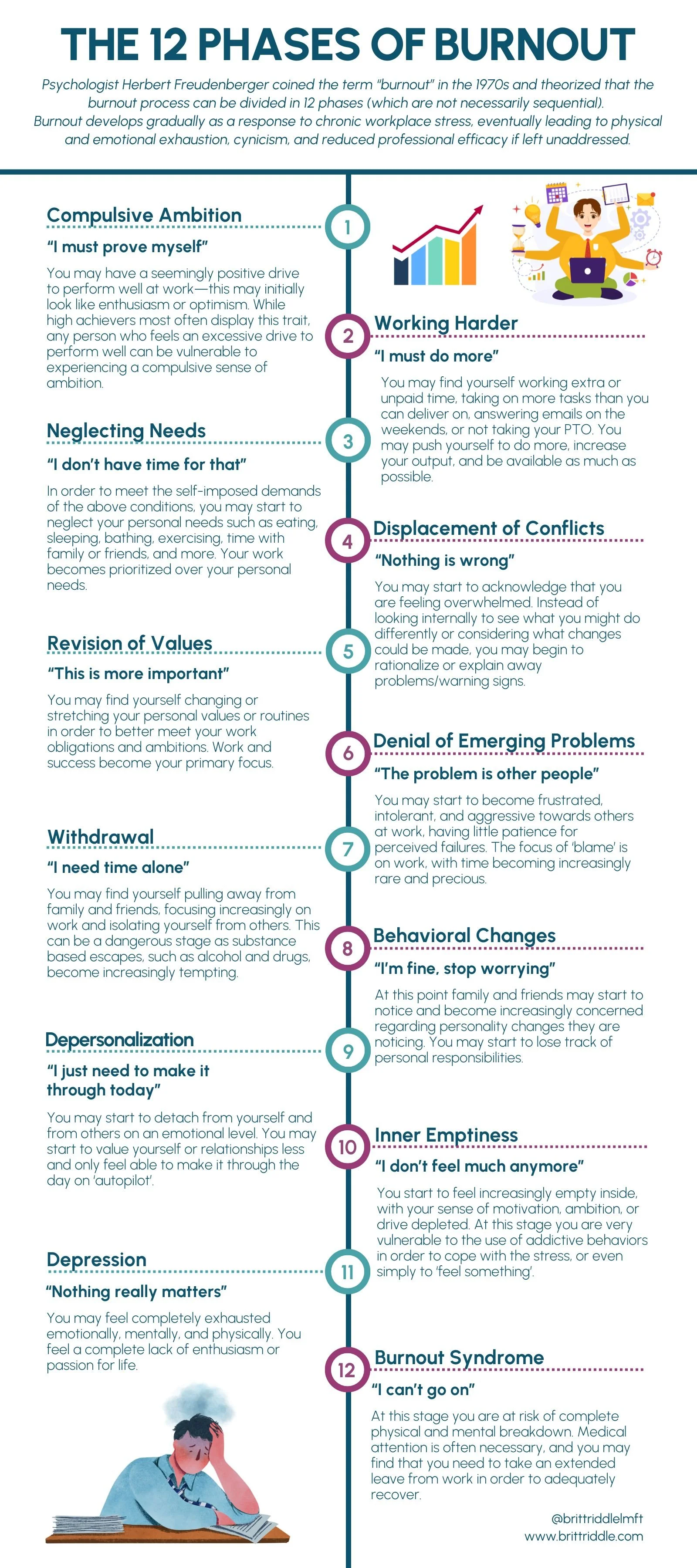
Burnout is what happens when prolonged, unmanaged stress depletes you past the point where rest alone can restore you. It’s not a personal failure or a sign that you chose the wrong work. It’s what high-demand environments do to people who care—and keep caring—without enough support or recovery.
COMPASSION FATIGUE
Compassion fatigue goes a layer deeper. It’s the cost of absorbing other people’s pain as part of your job. Therapists, nurses, social workers, teachers, ministers, chaplains, first responders, family caregivers—people whose work requires them to hold space for suffering, crisis, and grief. Over time, that weight accumulates. The capacity to feel starts to dim. And that dimming can feel like a moral failure when it's actually a nervous system response.
You’re not broken. You’re depleted. Those are different problems with different solutions.
SIGNS OF BURNOUT & COMPASSION FATIGUE
Signs you may be experiencing burnout or
compassion fatigue:
Emotionally:
You feel numb, detached, or cynical in ways that aren’t like you
It’s harder to access empathy for clients, patients, or the people you care for
You’re carrying others’ stories home with you and can’t set them down
Joy feels further away than it used to
Physically:
You’re tired in a way that sleep doesn’t fix
Tension headaches, stomach issues, changes in appetite or sleep
A persistent low-grade sense of dread about going to work
Professionally:
You’re questioning whether you are actually making a difference—or whether you ever were
Boundaries feel harder to hold, or you’ve stopped trying
Paperwork and administrative tasks feel overwhelming
You’re fantasizing about quitting, or already have
HELPING PROFESSIONS
Helping Professions
This work is especially for people in high-demand caring roles—and for those who feel pressure to have it all together, even when they're running on empty.
Helping professionals: therapists, counselors, social workers, nurses, physicians, teachers, school counselors, first responders
Faith leaders & clergy: ministers, chaplains, pastoral counselors, church staff
Non-profit & advocacy workers: people doing meaningful work in under-resourced environments
Family caregivers: those caring for aging parents, children with complex needs, or ill partners—often without formal support
If your work involves holding space for others’ pain, you’re in the right place.
Let’s work together to help you:
Understand what got you here—what your nervous system has been carrying and for how long
Recognize your early warning signs before depletion becomes a crisis
Build sustainable rhythms that protect your capacity to care without depleting yourself
Set and hold professional boundaries while staying genuinely connected to your work
Process difficult cases, values misaligment, and the grief that comes with caring work
Reconnect with your sense of purpose—or grieve it, if it's changed